




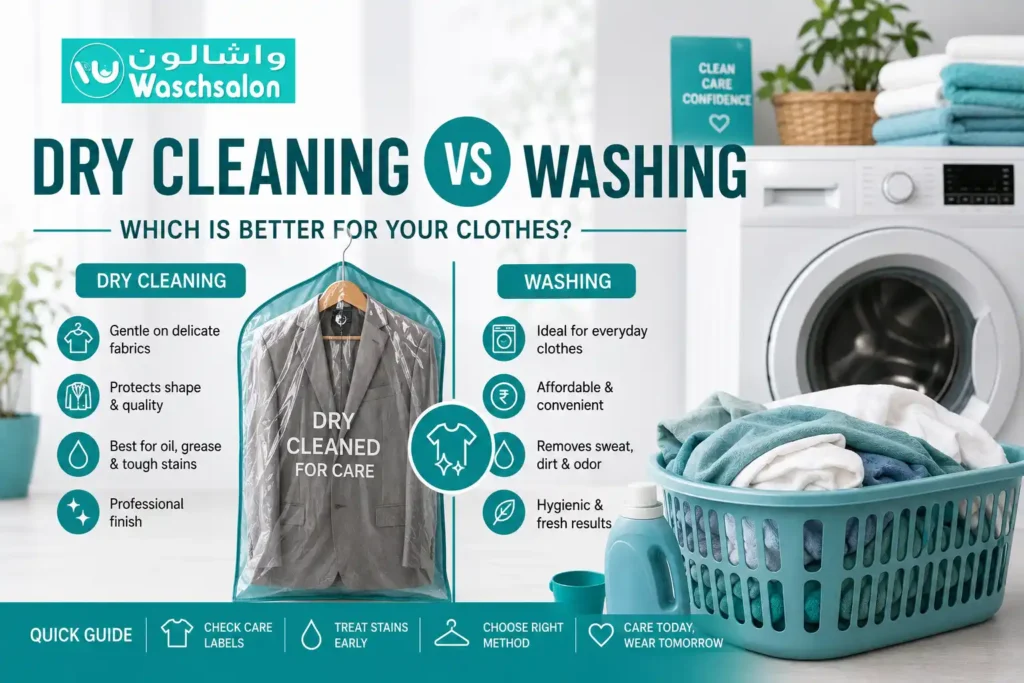
Dry Cleaning vs Washing
Our Clothes go through a lot every single day, like dust, sweat, stains, pollution, and regular wear and tear. Keeping your clothes clean is not just about appearance, but cleaning clothes helps to maintain fabric quality, color, and durability. But when it comes to cleaning clothes, most of the people are confused which method is best for their clothes – Dry Cleaning or Regular Washing.
Both methods are designed to clean clothes, but they have completely different processes of cleaning based on different types of fabrics. Understanding the difference between dry cleaning and washing can help you protect your favorite outfits, avoid fabric damage, and make your clothes last longer. Whether it’s your everyday wear, office attire, delicate sarees, or expensive suits, choosing the right cleaning method matters, which we will discover in this blog.
What Is Regular Washing?
Regular washing is the most common method used for cleaning clothes. It involves using water, detergent, and either hand washing or a washing machine to remove dirt, sweat, bacteria, and stains from garments. This washing method works best for everyday clothing made from durable fabrics such as cotton, polyester, denim, and linen.
How Washing Works
During washing:
- Water loosens dirt and stains
- Detergent breaks down oils and grime
- Agitation from the machine helps remove impurities
- Clothes are rinsed and dried afterward
Depending on the fabric type, clothes may be washed in hot, warm, or cold water.
Advantages of Regular Washing of Clothes
- Affordable and Convenient – Washing Clothes at home is the most convenient and affordable method. These days, with the fast-moving life, most people own a washing machine at home, so this is the simplest way.
- Ideal for Daily Wear – Regular washing is perfect for T-shirts, Jeans, Bedsheets, Towels, School uniforms, and Casual wear.
- Removes Sweat and Dirt Effectively – Water-based cleaning works well for removing body oils, dust, and daily grime.
- Hygienic Cleaning – Detergents and warm water help eliminate bacteria and odors, making clothes feel fresh and clean.
Disadvantages of Washing
Despite its benefits, regular washing does not suit all types of fabrics
- Fabric Shrinkage – Certain fabrics, like wool or silk, may shrink when exposed to water and heat.
- Color Fading – Frequent washing can cause colors to fade over time.
- Fabric Damage – Delicate materials may stretch, lose shape, or become rough after repeated washing.
- Difficult for Oil-Based Stains – Grease, makeup, and oil stains are sometimes difficult to remove using regular detergent alone.
What Is Dry Cleaning?
Dry cleaning is a professional cleaning method that uses chemical solvents instead of water to clean garments. Despite the name, clothes are not actually “dry.” Instead of water, special liquid solvents are used to dissolve stains and oils.
Dry cleaning is mainly recommended for delicate fabrics and expensive garments that may get damaged during regular washing in a machine.
How Dry Cleaning Works
The dry cleaning process usually includes
- Inspection of garments
- Pre-treatment of stains
- Cleaning using solvent-based machines
- Drying and steam pressing
- Final finishing and packaging
Since water is not used in this method, fabrics are protected from shrinking, stretching, or losing shape.
Advantages of Dry Cleaning
- Gentle on Delicate Fabrics – Dry cleaning is best suited for fabrics like Silk, Wool, Velvet, Cashmere, Rayon, and Embroidered garments
- Preserves Garment Shape – Structured clothing such as blazers, coats, suits, and sarees maintains their original fit and appearance.
- Better for Grease and Oil Stains – Solvents used in dry cleaning are highly effective against Makeup stains, Food grease, Oil marks, and Ink stains
- Professional Finish – Dry-cleaned clothes often look crisp, polished, and wrinkle-free.
Disadvantages of Dry Cleaning
- More Expensive – Dry cleaning costs more compared to home washing.
- Requires Professional Service – Dry cleaning cannot be done at home.
- Chemical Usage – Some traditional dry cleaning solvents may have environmental concerns, although many modern cleaners now use eco-friendly methods.
- Not Necessary for Every Garment – Every garment does not require dry cleaning, as it can become a huge expense burden
Dry Cleaning vs Regular Washing: Key Differences
| Feature | Washing | Dry Cleaning |
| Cleaning Method | Water + detergent | Chemical solvents |
| Best For | Everyday clothing | Delicate and expensive garments |
| Cost | Affordable | More expensive |
| Fabric Care | May shrink delicate fabrics | Gentle on fabrics |
| Stain Removal | Dirt and sweat | Oil and grease |
| Convenience | Easy at home | Requires professional service |
| Garment Shape | May lose shape | Maintains structure |
Which Clothes Should Be Regular Washed?
Regular washing is best suited for Cotton clothes, Daily wear, Sportswear, Towels, Bedsheets, Kids’ clothing, and Polyester garments. These fabrics are durable enough to handle water and machine movement.
Which Clothes Should Be Dry Cleaned?
Dry cleaning is recommended for Suits and blazers, Silk sarees, Heavy embroidery outfits, Wedding dresses, Wool coats, Delicate party wear, and Designer garments. Always check the care label before deciding to put them for dry cleaning.
Tips to Make Your Clothes Last Longer
- Read Garment Care Labels Carefully and Follow Instructions
- Separate Whites and Colored Clothes before putting them for washing
- Avoid excessive heat while drying, don’t put clothes in direct sunlight/
- Do not overwash delicate garments, as they may fade or shrink
- Treat Stains Immediately
- Use dry cleaning only when required for delicate fabrics
- Store clothes properly in your wardrobe after washing
Proper clothing care can extend the life of your garments and keep them looking fresh for years.
Final Thoughts
Dry Cleaning & Regular Washing are good for cleaning your clothes, they have their own set of advantages and disadvantages, and neither is universally better than the other. The correct method depends on the fabric type, garment value, and the kind of stain or dirt involved.
For everyday and regular clothes, regular washing in a washing machine is a practical, affordable, and effective solution. However, for delicate, expensive, or structured garments, dry cleaning offers safer and more professional care.
Understanding when to wash and when to dry clean can save you money, protect your favorite clothes, and help maintain their appearance and quality over time.